Double elimination: what it is and how the lower bracket works
5/27/2026
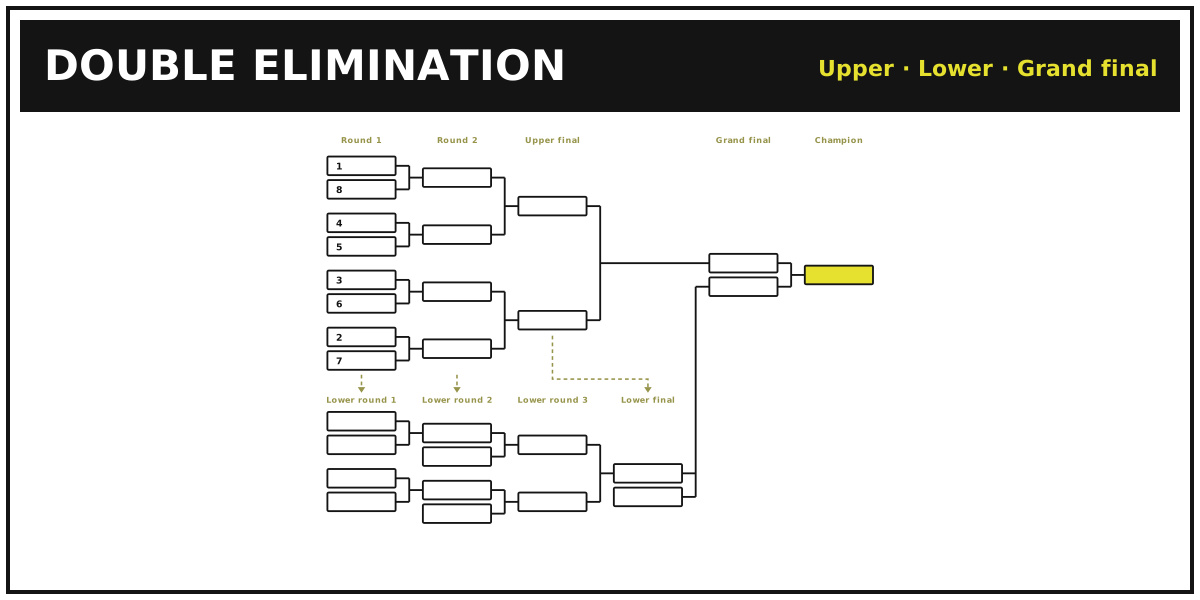
In single elimination one bad game ends your tournament. Double elimination fixes exactly that: every participant gets a second life. The price is a second bracket — the lower bracket (also called the losers' bracket) — and that is the part that raises the most questions. Let's take it apart: where the losers drop to, why the lower rounds alternate, and who gets to the grand final.
Two brackets, two lives
- Everyone starts in the upper bracket — a regular knockout bracket.
- A player who loses there is not out: they drop into the lower bracket and keep playing.
- A loss in the lower bracket is the second loss — and that one eliminates.
- The winner of the upper bracket and the survivor of the lower bracket meet in the grand final.
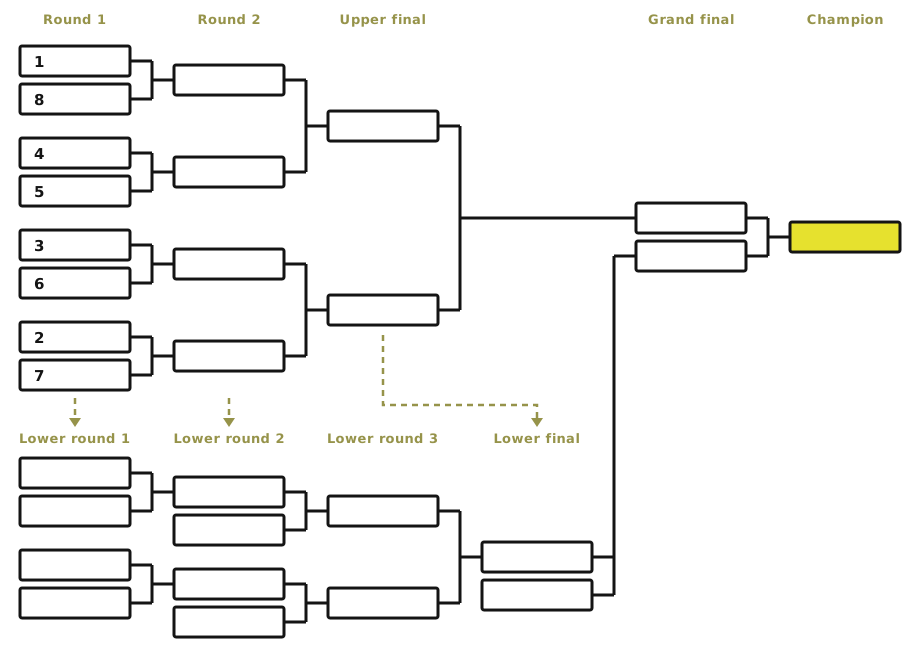
The result: the champion is the only participant who finishes with fewer than two losses, and nobody's tournament ends because of a single bad game.
How the lower bracket is built
For N players the upper bracket is an ordinary knockout tree with log₂(N) rounds. The lower bracket is twice as long but half as tall: it has (log₂(N) − 1) × 2 rounds, and they alternate between two kinds:
- Drop-in rounds — a fresh wave of upper-bracket losers enters and plays against the survivors of the lower bracket.
- Internal rounds — only lower-bracket survivors play each other; nobody new arrives.
That alternation is exactly why the lower bracket halves every two rounds instead of every round: each wave of newcomers has to be absorbed before the field can shrink again.
For 8 players it works like this. The upper bracket has 3 rounds, the lower one has 4. The four losers of upper round 1 fill lower round 1 completely. Its two winners advance to lower round 2, where the two losers of the upper semifinals drop in. Lower round 3 is internal. Its winner meets the loser of the upper final in lower round 4 — the lower final — and the winner of that match earns the grand final.
The drop map: who falls where
Each upper round sends its losers to a fixed lower round: round 1 → lower round 1, round 2 → lower round 2, round 3 → lower round 4, round 4 → lower round 6, and so on — the internal rounds are always skipped.
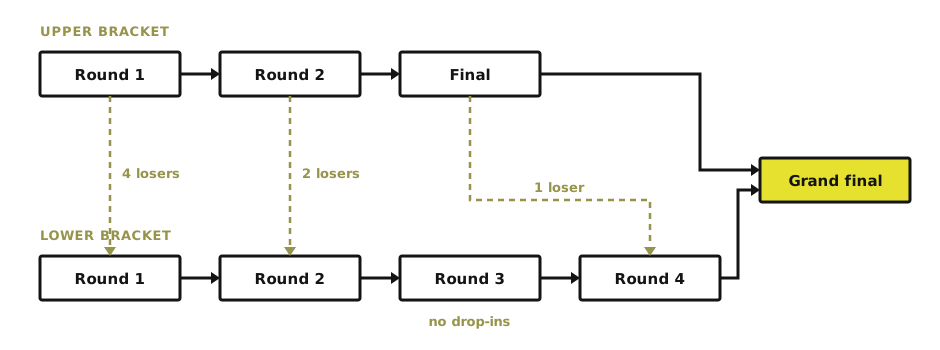
Two placement details keep the format fair:
- Mirrored placement. Drop-ins are placed in reverse order relative to their position in the upper bracket, so the player who just knocked you out doesn't land next to you for an immediate rematch.
- Drop-ins meet survivors. From lower round 2 onward, every drop-in faces a player who has already won at least once in the lower bracket — a fresh loser never gets a free pass deeper into the bracket.
In Tlab.pro the drop map and the placement are part of the bracket generation: the lower bracket appears and fills itself as the results come in.
The grand final — and why there is no third-place match
The grand final pairs two very different players: the upper-bracket champion, who hasn't lost at all, and the lower-bracket champion, who has exactly one loss. In Tlab.pro the grand final is a single deciding match: whoever wins it takes the title. (Some rulesets — mostly in esports — add a bracket reset: if the lower-bracket player wins, a second decisive match is played, because the upper finalist "still has a life left".)
A pleasant side effect of the lower bracket: a third-place match is unnecessary. The loser of the lower final is third automatically — in general, the further you get before your second loss, the higher your final place.
How many matches to plan for
Every match hands out exactly one loss, and every participant except the champion collects two of them. That gives a simple total: 2 × N − 2 matches — almost exactly double the N − 1 of single elimination. In return, every participant is guaranteed at least two games, which matters a lot when people travel to your event to play.
| Players (N) | Upper rounds | Lower rounds | Matches | Single elimination, for comparison |
|---|---|---|---|---|
| 4 | 2 | 2 | 6 | 3 |
| 8 | 3 | 4 | 14 | 7 |
| 16 | 4 | 6 | 30 | 15 |
| 32 | 5 | 8 | 62 | 31 |
Doing it in Tlab.pro
In the tournament creation wizard pick the Playoff format and set elimination after two losses — that is double elimination. The lower bracket, the drop map and the grand final are generated automatically, and entering a result moves the winner on and drops the loser in one step. As in single elimination, the field size is a power of two: missing slots are filled with empty participants, and their "free wins" carry through the lower bracket as well. The cap is lower, though: currently up to 128 participants, compared with 1024 in single elimination. The full wizard walkthrough is in the help section.
If double elimination is the final stage of a bigger event — say, after a round-robin group — you can link the stages together so participants carry over. And if you are still weighing the options, start with our guide to choosing a tournament format.
When you are ready, create your tournament — Tlab.pro will draw both brackets for you. A quick overview of the bracket tool — double elimination included — is on the single elimination bracket generator page.